

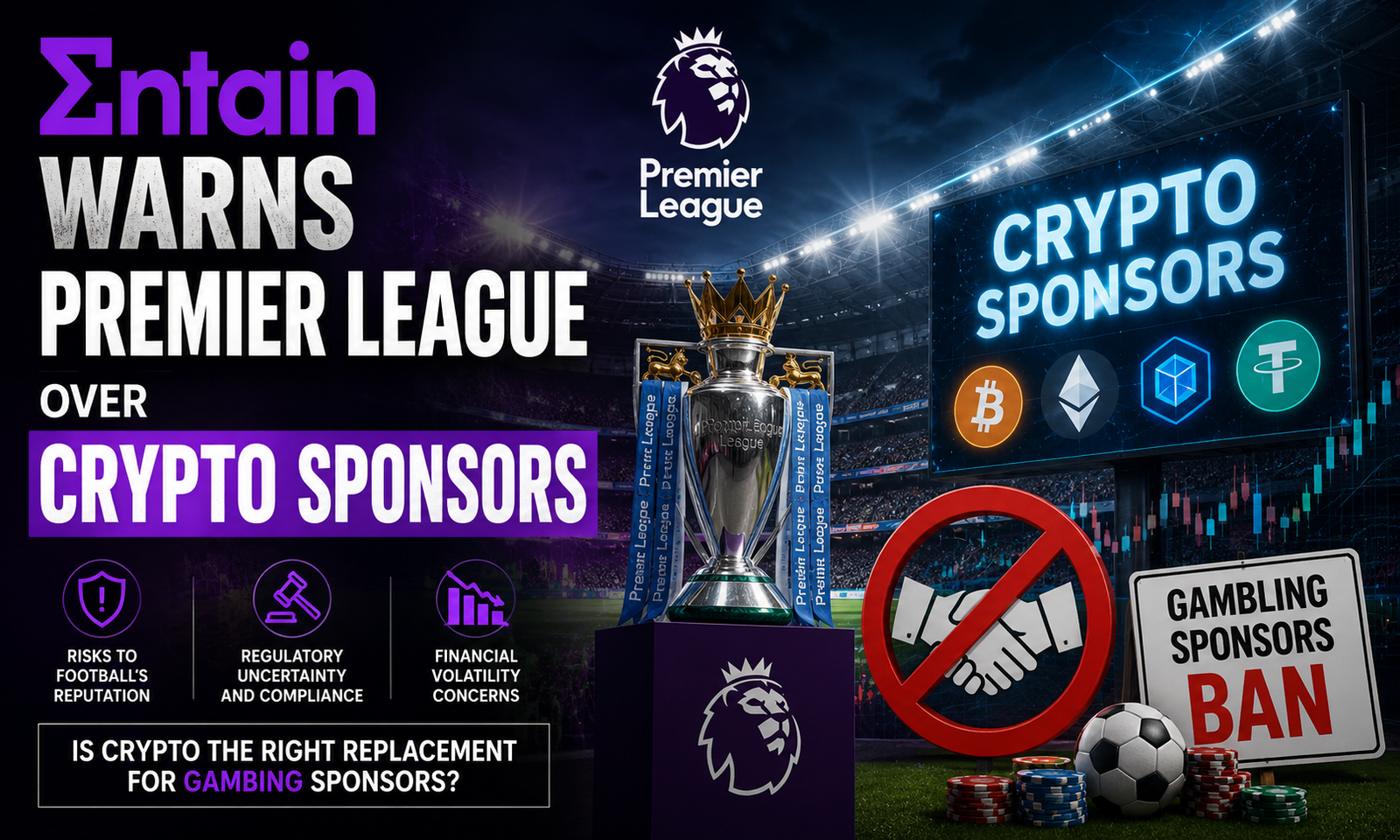
The relationship between football, gambling companies, and cryptocurrency firms is facing unprecedented scrutiny. Recently, Entain directly criticized several Premier League clubs for their growing dependence on crypto-related sponsorships amid increasing regulatory pressure on gambling advertisements. The controversy comes at a time when English football is already preparing for a major gambling sponsorship ban that will significantly reshape commercial partnerships across the league.
The debate surrounding cryptocurrency reliance, betting sponsorships, and football finances has intensified as clubs search for alternative revenue streams. With gambling companies gradually being pushed away from front-of-shirt sponsorships, many Premier League teams have begun turning toward crypto firms, blockchain platforms, NFT projects, and Web3 companies to fill the financial gap. However, critics argue that replacing betting sponsors with volatile crypto partnerships could create a new set of ethical and financial concerns. Entain’s remarks have sparked broader discussions across the sports industry about whether football clubs are becoming too dependent on speculative industries for commercial survival. The issue also highlights the evolving relationship between sports marketing, fan engagement, digital assets, and regulatory compliance.
As the Premier League prepares for stricter sponsorship rules, the intersection of football finance and cryptocurrency adoption is becoming one of the most talked-about topics in global sports business. This article explores why Entain targeted Premier League clubs, how cryptocurrency sponsorships are reshaping football, the risks involved, and what the future may hold for clubs navigating this changing commercial landscape.
The Growing Conflict Between Football and Gambling Sponsorships
For years, gambling companies have maintained a dominant presence in English football. Major betting brands have invested millions into shirt sponsorships, stadium advertising, and digital partnerships with Premier League clubs. These deals became a critical source of revenue, especially for mid-table and lower-tier teams seeking financial stability.
However, mounting political pressure and concerns over gambling addiction forced English football authorities to reconsider the visibility of betting advertisements. Public health advocates argued that constant exposure to gambling branding normalized betting behavior among young fans and vulnerable audiences. As a result, Premier League clubs collectively agreed to phase out front-of-shirt gambling sponsorships in the coming years. While betting firms can still advertise through other channels, the most visible form of sponsorship will disappear from matchday broadcasts.
This transition has created uncertainty throughout football’s commercial ecosystem. Clubs that previously depended on lucrative gambling contracts are now scrambling to identify replacement sponsors capable of matching similar financial commitments. That financial vacuum has opened the door for cryptocurrency companies.
Why Cryptocurrency Companies Are Entering Football
The rapid growth of the digital asset industry has transformed sports sponsorships globally. Crypto exchanges, blockchain startups, NFT platforms, and fintech firms have aggressively pursued partnerships with football clubs to expand brand recognition and reach younger audiences. The Premier League offers unmatched global exposure, making it an attractive marketing platform for crypto firms seeking mainstream legitimacy. Football clubs, in turn, view these partnerships as a modern alternative to gambling sponsorships.
Several teams have already signed deals involving:
- Crypto exchanges
- Fan token providers
- NFT marketplaces
- Blockchain payment companies
- Web3 gaming platforms
- Digital wallet services
These partnerships often include innovative fan engagement strategies, such as blockchain-based loyalty programs, tokenized voting systems, and digital collectibles. For clubs, crypto sponsorships represent more than simple advertising revenue. They also symbolize modernization and technological innovation. Many executives believe blockchain technology could redefine fan interaction and digital commerce within sports.
Yet concerns remain about whether football clubs fully understand the risks associated with the volatile cryptocurrency market.
Why Entain Criticized Premier League Clubs
Entain publicly questioned whether Premier League clubs are becoming overly reliant on cryptocurrency firms as gambling sponsorship regulations tighten. The company argued that some football organizations appear eager to replace one controversial industry with another potentially unstable sector. Entain’s criticism focused on the idea that crypto sponsorships may expose clubs and fans to financial uncertainty, regulatory ambiguity, and reputational risks.
The betting giant also suggested that cryptocurrency companies currently operate in a less mature regulatory environment compared to licensed gambling operators. While betting firms must comply with strict advertising standards, anti-money laundering policies, and consumer protection laws, many crypto firms remain subject to evolving oversight frameworks. This distinction is important because football clubs increasingly face pressure to ensure sponsorship partners align with responsible business practices.
Entain’s comments may also reflect competitive frustration. As gambling sponsorship opportunities shrink, crypto firms are increasingly occupying commercial spaces once dominated by betting companies. The transition signals a broader shift in sports marketing priorities. Still, Entain’s warning resonated because several crypto firms have already collapsed after signing major sports partnerships.
The Risks of Cryptocurrency Reliance in Football
Financial Instability
One of the biggest concerns surrounding crypto sponsorships is market volatility. Cryptocurrency prices can experience dramatic fluctuations within short periods, affecting the financial stability of sponsoring companies. Several crypto firms that once spent heavily on sports marketing later encountered severe liquidity problems or bankruptcy. When these companies fail, clubs may lose promised sponsorship payments and face reputational fallout.
Football organizations that become heavily dependent on crypto partnerships risk exposing themselves to unpredictable commercial disruptions.
Regulatory Uncertainty
The global cryptocurrency industry remains subject to rapidly changing regulations. Governments worldwide continue debating how to classify and regulate digital assets, exchanges, and token-based products. This uncertainty creates challenges for sports clubs entering long-term sponsorship agreements. A company considered compliant today could face legal restrictions tomorrow. Premier League teams must carefully evaluate whether potential crypto partners meet evolving financial and regulatory standards.
Fan Protection Concerns
Critics also argue that crypto promotions can expose fans to speculative financial products. Just as gambling advertising raised concerns about addiction and consumer harm, cryptocurrency marketing faces accusations of encouraging risky investment behavior. Supporters may feel pressured to purchase fan tokens, NFTs, or digital assets associated with their clubs without fully understanding the risks involved. The emotional connection between fans and football clubs creates ethical questions about how commercial partnerships influence consumer behavior.
The Rise of Fan Tokens and Blockchain Engagement
Despite the concerns, blockchain-based fan engagement tools continue gaining popularity in football. Fan tokens allow supporters to participate in club-related polls, access exclusive content, and receive loyalty rewards through blockchain technology. Some clubs view these programs as innovative ways to strengthen global fan communities.
Blockchain technology also enables secure digital ownership of collectibles, matchday experiences, and virtual merchandise. For clubs seeking international expansion, these digital ecosystems offer new revenue opportunities beyond traditional ticket sales and merchandising. However, critics argue that fan token systems often blur the line between engagement and speculation. Token values can fluctuate significantly, leading some fans to treat them as investment assets rather than loyalty products. This dynamic has intensified scrutiny around football’s growing connection to crypto markets.
Premier League Clubs Facing Commercial Pressure
The Premier League remains one of the world’s most commercially competitive sports leagues. Clubs constantly seek new sponsorship opportunities to remain financially competitive in player recruitment, infrastructure investment, and global branding. Top clubs generate enormous broadcasting revenues, but smaller teams rely more heavily on commercial partnerships. The removal of gambling shirt sponsors could disproportionately affect mid-sized organizations with fewer sponsorship alternatives.
As a result, many clubs see cryptocurrency companies as one of the few industries willing to commit substantial sponsorship budgets. This economic reality partly explains why crypto partnerships have expanded so quickly despite ongoing controversy. Football executives argue that clubs cannot simply reject entire industries without securing viable financial replacements.
How Regulators Are Responding
Regulatory authorities across Europe are increasingly examining the intersection of sports sponsorships and cryptocurrency marketing. Some regulators want clearer disclosure requirements for fan tokens and digital asset promotions. Others are evaluating whether crypto advertisements should face restrictions similar to gambling marketing rules.
Authorities are particularly concerned about younger audiences exposed to financial promotions during football broadcasts and online engagement campaigns. The evolving regulatory environment could reshape how clubs structure future partnerships.
Potential measures may include:
- Enhanced transparency requirements
- Financial risk disclosures
- Advertising limitations
- Consumer protection standards
- Licensing obligations for crypto sponsors
These developments may force clubs to conduct stricter due diligence before signing crypto-related agreements.
The Reputation Factor for Football Clubs
Modern football clubs operate as global entertainment brands. Their commercial decisions directly influence public perception and supporter trust. Associating with controversial industries can create reputational risks, especially when sponsors become involved in scandals or financial collapses.
Several sports organizations faced backlash after high-profile crypto exchange failures affected fans and investors worldwide. Critics accused clubs of promoting companies that later caused consumer losses. As public scrutiny increases, clubs may need to balance commercial profitability with ethical considerations more carefully. Sponsors are no longer evaluated solely based on financial value. Their long-term stability, regulatory compliance, and brand reputation now matter more than ever.
Could Crypto Sponsorships Replace Gambling Deals Permanently?
The future of cryptocurrency sponsorships in football remains uncertain. On one hand, blockchain technology continues attracting investment and innovation. Many experts believe digital assets and decentralized finance will remain influential parts of the global economy.
Football clubs seeking digital transformation may continue embracing blockchain partnerships as part of broader modernization strategies. On the other hand, market volatility and regulatory uncertainty make crypto sponsorships inherently risky. If additional crypto firms collapse or governments impose stricter regulations, clubs could become more cautious.
The situation may ultimately depend on how the cryptocurrency industry matures over the next several years. If stronger regulation improves consumer protection and market stability, crypto sponsorships could become a permanent feature of football commerce. If instability persists, clubs may pursue safer industries instead.
The Broader Impact on Sports Sponsorships
The controversy surrounding Entain’s criticism extends beyond football. Sports organizations worldwide are reevaluating sponsorship relationships as regulators, fans, and governments demand greater accountability. Industries once considered acceptable sponsors now face ethical scrutiny regarding their social impact. This shift reflects changing expectations around corporate responsibility in sports marketing.
Clubs increasingly must consider:
- Consumer protection
- Youth exposure
- Financial transparency
- Long-term brand reputation
- Regulatory compliance
The evolution of sports sponsorships may ultimately create stricter commercial standards across the entire industry.
Cryptocurrency Reliance and the Future of Football Finance
The phrase cryptocurrency reliance captures a growing concern within professional sports. As traditional sponsorship models evolve, clubs are searching for industries capable of supporting escalating financial demands. Crypto firms entered football aggressively because they saw enormous marketing value in global sports exposure. Clubs welcomed the partnerships because they offered substantial revenue during a period of commercial transition.
However, dependency on volatile industries creates vulnerabilities. Football’s financial ecosystem already faces challenges involving rising wages, transfer inflation, and competitive pressure. Relying too heavily on uncertain sponsorship sectors could amplify those risks. The ideal long-term solution may involve greater sponsorship diversification rather than dependence on any single controversial industry.
Entain has ignited an important debate by directly targeting Premier League clubs over their growing cryptocurrency reliance following gambling sponsorship restrictions. The issue highlights the complex intersection of football finance, regulation, technology, and corporate ethics. As gambling sponsors retreat from front-of-shirt deals, cryptocurrency companies have rapidly emerged as major commercial partners for football clubs seeking replacement revenue. While these partnerships offer innovation and financial opportunities, they also introduce new concerns involving market volatility, regulatory uncertainty, and fan protection.
The future of crypto sponsorships in football will likely depend on how the digital asset industry evolves. Stronger regulation and greater transparency could legitimize blockchain partnerships within sports. Continued instability, however, may force clubs to rethink their commercial strategies. Ultimately, football organizations must balance financial ambition with responsible decision-making. The choices made today regarding sponsorships and digital partnerships could shape the future reputation and stability of the sport for years to come
