

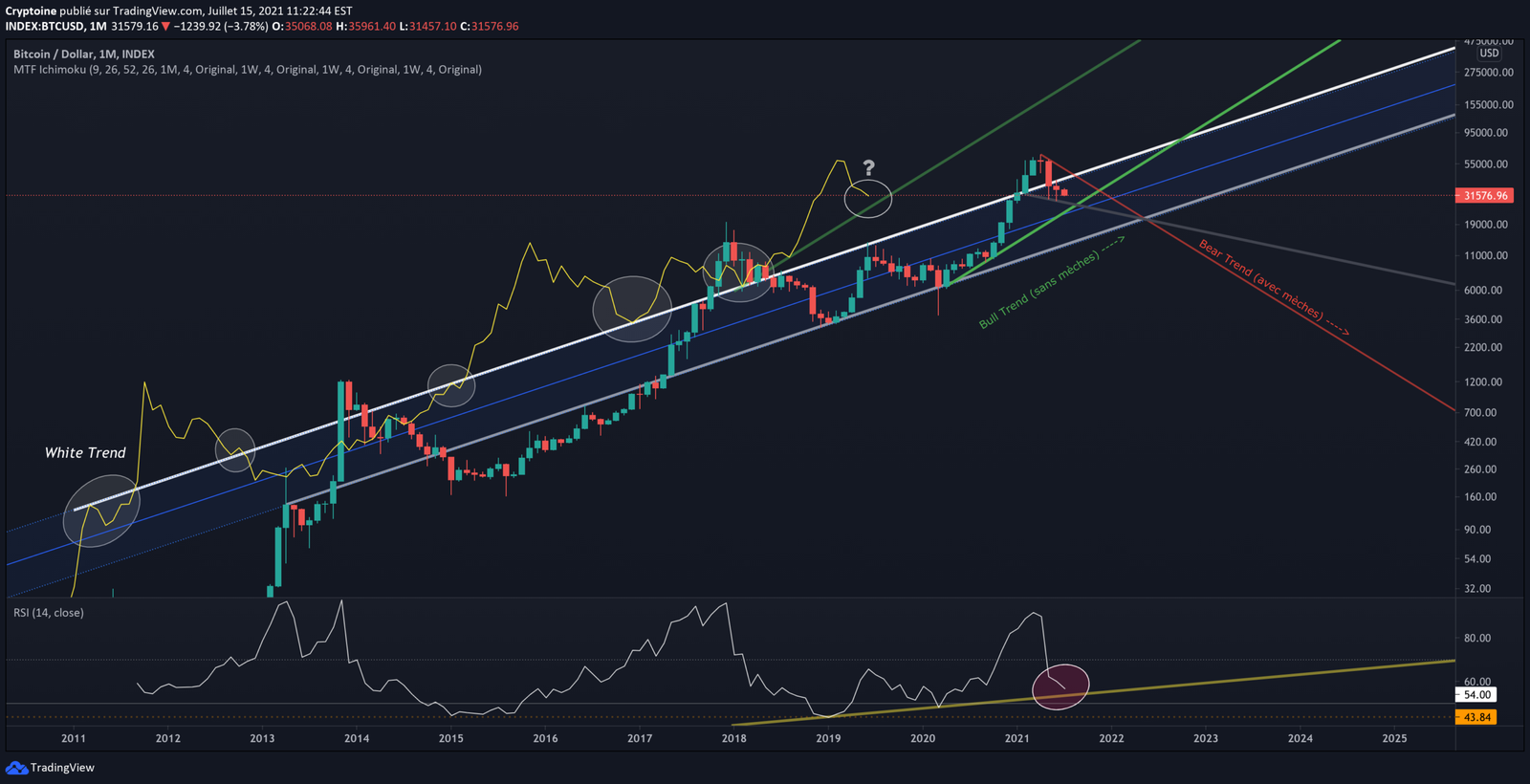
In btc usd tradingview technical analysis, you’re not looking for hype—you want a clean way to read the BTC USD chart on TradingView, spot trend direction, and make decisions with structure instead of emotions. Bitcoin moves fast, and the same candle that looks like “a breakout” on a 5-minute chart can be a meaningless wiggle on the daily timeframe. That’s why TradingView is so popular for Bitcoin technical analysis: it lets you compare multiple timeframes, apply indicators like RSI and MACD, draw support and resistance zones, and build a repeatable routine for analyzing BTCUSD. In this guide, you’ll learn a practical TradingView workflow, the indicators that actually help, and the most common “first-page Google” questions people ask—so your btc usd tradingview technical analysis becomes consistent, readable, and actionable.
BTC USD TradingView Technical Analysis on the Live BTCUSD Chart
TradingView’s BTCUSD pages are built for real-time charting, technical tools, and community ideas, which is why “BTCUSD” is one of the most searched crypto tickers on the platform. As of the latest market snapshot available in this session, Bitcoin is trading around $68,009 (BTC/USD). Price changes, however, are only the surface. The real goal of btc usd tradingview technical analysis is to answer three questions clearly.
First, what is the dominant trend on the timeframe you care about? Second, where are the high-probability decision zones where buyers or sellers have historically reacted? Third, what confirms that price is actually doing what you think it’s doing? When you build your analysis around those three questions, TradingView stops being “a chart with lots of lines” and becomes a structured decision tool.
Why TradingView Is a Go-To Platform for BTCUSD TradingView Analysis
People gravitate to BTCUSD TradingView because it combines live charts, drawing tools, indicator libraries, alerts, and multi-timeframe views in one workspace. TradingView’s BTCUSD pages are explicitly designed for real-time charting, technical analysis, forecasts, and market news.
For btc usd tradingview technical analysis, that matters because Bitcoin trades 24/7. There’s no market close to “reset” volatility. A clean TradingView setup helps you avoid two common mistakes: reacting to noise and overfitting indicators.
If you’ve ever felt like BTC “moves against you right after you enter,” it’s often because you entered based on a small timeframe signal that wasn’t aligned with the larger trend. TradingView makes it easier to see that alignment—if you build your workflow correctly.
The Best Chart Setup for BTC USD Chart Clarity
A strong btc usd tradingview technical analysis setup starts with a chart that is easy to read. Not “more indicators.” More clarity. Use candlesticks because they show open, high, low, close in one view, which makes trend and momentum easier to see than a simple line chart.
Then adjust your chart so candles are visible without compression. A clean chart naturally reduces bad decisions. The most important habit is multiple timeframe alignment. Most traders get trapped by the timeframe they’re staring at. A clean workflow keeps you grounded.
The multi-timeframe method that prevents bad signals
Start on the weekly to identify macro trend and major zones. Move to the daily to refine support and resistance. Then use the 4-hour to plan entries with more detail. Use the 1-hour or 15-minute only to time execution, not to decide direction.
This is where btc usd tradingview technical analysis becomes less emotional. If weekly and daily trend is up, you don’t treat every small dip as a crash. If weekly and daily trend is down, you don’t chase every green candle as “the bottom.”
Support and Resistance in btc usd tradingview technical analysis
If there’s one skill that improves your TradingView results fastest, it’s drawing support and resistance correctly. Most “indicator-heavy” charts fail because traders skip structure.
Support is a zone where buyers have historically stepped in. Resistance is a zone where sellers have historically pushed price down. The keyword is zone, not a single magic line. Bitcoin often pierces levels before reversing, especially during high volatility, which is why zones are more realistic than razor-thin lines.
A practical way to map zones on the BTCUSD chart is to mark areas where price repeatedly changed direction and where volume expanded. Those areas tend to matter again because many traders watch them, and because liquidity concentrates there. In btc usd tradingview technical analysis, support and resistance become even more powerful when combined with trend direction and momentum confirmation. Structure tells you where. Indicators help you judge when.
Trendlines and Market Structure for BTCUSD
Trendlines are one of the simplest tools on TradingView, and also one of the most abused. The goal is not to force a trendline onto every move. The goal is to identify the dominant slope of price action and where it breaks. A clean trendline is supported by multiple touches and aligns with obvious swing points. When a trendline breaks, that doesn’t automatically mean “trend reversal.” It can mean “trend pause.” That’s why market structure matters.
Market structure, in practical TradingView terms, means watching higher highs and higher lows for uptrends, and lower highs and lower lows for downtrends. When structure changes, the behavior of rallies and pullbacks changes. In btc usd tradingview technical analysis, that structure shift is often the earliest warning that a trend is weakening.
When you combine trendlines with structure, you stop chasing candles and start reading the story: is BTCUSD still building strength, or is it distributing?
RSI in btc usd tradingview technical analysis
RSI is one of the most searched TradingView indicators because it’s easy to add and easy to misread. TradingView describes the Relative Strength Index as a momentum oscillator designed to measure the speed and magnitude of directional price moves. Investopedia similarly explains RSI as a momentum indicator used to evaluate overbought or oversold conditions.
The mistake most beginners make is treating RSI above 70 as “sell now” and below 30 as “buy now.” In strong trends, RSI can remain elevated or depressed for long periods. The better approach is to use RSI to understand momentum behavior within a trend.
How to use RSI without getting trapped
If BTC is in an uptrend, RSI pullbacks toward mid-range can help identify healthier resets rather than panic signals. If BTC is in a downtrend, RSI failing to recover can confirm weakness rather than suggest a bargain.
Another high-signal concept is divergence. A bullish divergence happens when price makes a lower low but RSI makes a higher low, suggesting momentum is improving even as price is still weak. A bearish divergence is the opposite. Divergence is not magic, but it can add context to your btc usd tradingview technical analysis when paired with strong support or resistance zones.
MACD, Momentum Shifts, and Trend Confirmation
MACD remains popular because it visualizes momentum and trend change. Investopedia describes MACD as an indicator that charts the relationship between two exponential moving averages and helps spot momentum shifts and potential turning points. In btc usd tradingview technical analysis, MACD is often most useful in two scenarios: confirming trend continuation after a pullback, or warning that a trend is losing force.
MACD crossovers can be noisy on very small timeframes. That’s why many traders prefer using MACD on the daily or 4-hour for cleaner signals. The key is not the crossover itself, but whether momentum is expanding or fading as price approaches a major zone.
If BTCUSD is pushing into resistance and MACD momentum is flattening, it supports the idea that buyers are losing urgency. If BTCUSD is pulling back into support and MACD begins to turn upward, it supports the idea that selling pressure is weakening.
Moving Averages for BTCUSD Trend Bias
Moving averages are not prediction tools. They are trend filters. In btc usd tradingview technical analysis, moving averages help you avoid fighting the dominant direction.
Many traders use a combination like a 50-period and 200-period moving average on daily charts to judge long-term bias. The “golden cross” and “death cross” ideas are popular, but they are lagging signals. Their true value is context: they help you understand whether pullbacks are happening inside a broader uptrend or inside a broader downtrend.
A practical mindset is this: when price is above key moving averages and those averages are sloping upward, you focus on pullbacks and continuation setups. When price is below and the slope is down, you focus on rallies into resistance and risk management.
This alignment is what makes btc usd tradingview technical analysis feel calmer: you stop trying to trade every direction and start trading the direction that’s statistically more consistent.
Fibonacci Retracement and “Where the Pullback Ends”
Fibonacci retracement remains a first-page keyword because traders want a framework for pullbacks. The best way to use Fibonacci in btc usd tradingview technical analysis is to treat it as a confluence tool, not a standalone signal.
When a pullback reaches a Fibonacci level that also aligns with a prior support zone and a trendline, that confluence can create a decision area worth watching. If, on top of that, RSI shows improving momentum, you have a stronger story. If you use Fibonacci on every tiny swing, you will confuse yourself. Use it on meaningful swings on the timeframe you’re trading.
Volume and Volume Profile in BTCUSD Charts
Volume is one of the most underused tools in crypto analysis because people focus too heavily on indicators. But volume can tell you whether a move has participation or whether it’s drifting. In btc usd tradingview technical analysis, a breakout that happens with strong volume is generally more meaningful than a breakout that happens with weak volume. Likewise, a sell-off that accelerates on volume can signal fear-driven momentum, while a sell-off that fades on low volume can signal exhaustion.
Volume Profile tools can also help you see where trading activity has concentrated, which often matches support and resistance zones. When price moves away from a high-volume area into a low-volume gap, it can travel faster. That’s why BTC sometimes “teleports” through certain levels and then stalls at others.
Breakouts, Fakeouts, and How to Read Confirmation
The phrase breakout is one of the most searched terms alongside btc usd tradingview technical analysis, and for good reason: breakouts create big moves. They also create painful fakeouts.
A breakout becomes more credible when it closes above resistance on a higher timeframe, when volume expands, and when price retests the level and holds. A fakeout often happens when price spikes above a level briefly, fails to close above it, and then reverses sharply.
If you want to reduce fakeouts, treat the close as information, not the wick. Wicks show emotion; closes show acceptance. This is especially important in BTCUSD because volatility can produce dramatic wicks that don’t reflect sustained control.
BTCUSD TradingView Technical Analysis Routine
A repeatable routine is the secret weapon most traders ignore. The market changes, but your process should stay steady. Start by marking weekly and daily zones. Then identify trend direction and structure. After that, use indicators like RSI, MACD, and moving averages to confirm whether momentum agrees with your structure read. Finally, decide where your idea becomes invalid, because invalidation is what makes risk manageable.
This routine turns btc usd tradingview technical analysis into a system. Without a system, you will keep changing indicators until you find one that “predicts” the last move, which is the fastest path to frustration.
Risk Notes for Crypto Traders
Even the best btc usd tradingview technical analysis cannot remove uncertainty. Technical analysis improves structure and timing, but Bitcoin remains sensitive to macro liquidity, exchange flows, regulatory headlines, and sudden volatility.
Use analysis to plan, not to predict. Treat every idea as a probability, not a certainty. This is especially important in crypto, where leverage and 24/7 trading can amplify both wins and losses. If you’re new, keep your chart simple until you can explain every line you add. Complexity feels smart, but clarity makes money management easier.
Conclusion
The fastest way to improve your results is not to hunt for the “perfect indicator.” It’s to build a repeatable process for btc usd tradingview technical analysis that starts with trend and structure, maps clean support and resistance zones, and then uses RSI, MACD, and moving averages for confirmation. TradingView makes this workflow practical because its BTCUSD chart pages are designed for live tracking, multi-timeframe analysis, and technical tools in one place.
If you want to level up today, open the BTCUSD chart on TradingView, apply the routine from this guide, and save your layout. Then revisit your btc usd tradingview technical analysis daily for a week—same steps, same timeframes, same rules—and watch how much clearer Bitcoin’s price action becomes.
