

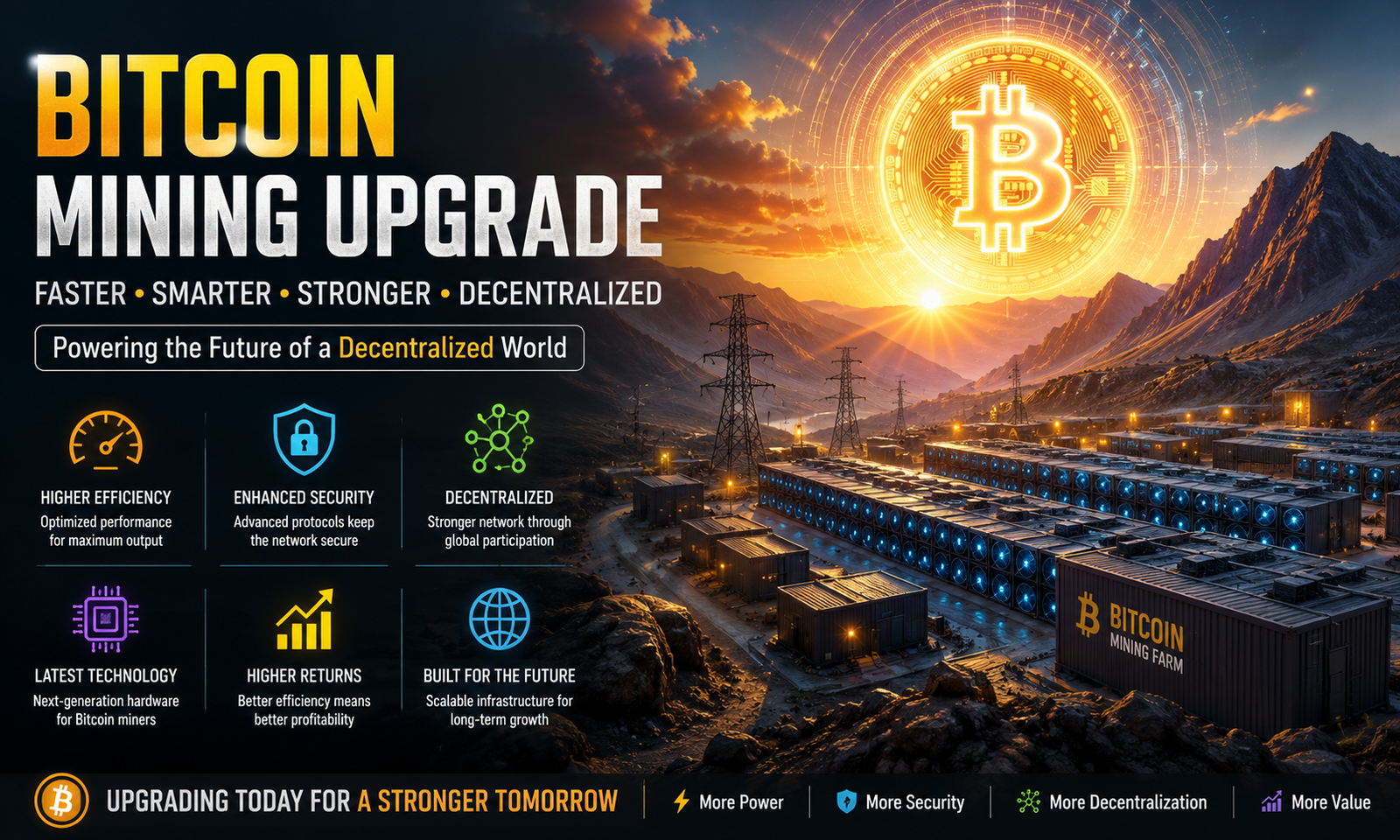
The Bitcoin ecosystem has reached another historic milestone with the successful mining of a block using the Stratum V2 protocol for the very first time. This achievement represents more than a technical upgrade—it signals a major step toward improving Bitcoin mining decentralization, network security, operational efficiency, and miner autonomy.
For years, Bitcoin mining infrastructure has relied heavily on older communication standards that connected mining pools and miners. While functional, these protocols introduced limitations related to centralization, inefficiency, and limited miner control. The emergence of Stratum V2 addresses many of these long-standing concerns and introduces a modern framework capable of supporting Bitcoin’s future growth.
The successful mining of a Bitcoin block through Stratum V2 demonstrates that the industry is beginning to adopt technology designed to strengthen the network’s resilience while empowering individual miners. As Bitcoin continues evolving, this development could influence how mining pools operate, how miners select transactions, and how the broader ecosystem approaches decentralization.
Bitcoin Mining and Why Protocols Matter
Bitcoin mining serves as the backbone of the network’s security model. Miners compete to solve cryptographic puzzles, validate transactions, and create new blocks. Every successfully mined block becomes part of Bitcoin’s immutable blockchain. Behind the scenes, miners communicate with mining pools through specialized protocols. These protocols determine how work assignments are delivered, how shares are submitted, and how block construction occurs.
For many years, the industry standard was Stratum V1, which simplified communication between miners and pools but introduced architectural constraints over time. As mining operations expanded globally and hash power became increasingly concentrated, concerns emerged around:
- Centralized block creation
- Limited miner decision-making
- Communication inefficiencies
- Security vulnerabilities
- Reduced transparency
These challenges created the foundation for developing Stratum V2.
What Is Stratum V2?
Stratum V2 is a next-generation communication protocol designed specifically for Bitcoin mining infrastructure. Originally proposed as an improvement over the existing mining stack, Stratum V2 introduces enhanced security, bandwidth efficiency, encryption mechanisms, and decentralized job negotiation capabilities.
Unlike older systems where mining pools controlled nearly every aspect of block construction, Stratum V2 allows miners to gain greater participation in selecting transactions. The protocol introduces several technical innovations that significantly improve mining operations while reducing dependence on centralized control structures.
Key Features of Stratum V2
One of the most significant innovations is Job Negotiation, which enables miners to participate in block template creation. Another major enhancement is encrypted communication. Traditional mining communications often lacked robust encryption, increasing exposure to interception and manipulation.
Bandwidth optimization is another important improvement. Stratum V2 reduces unnecessary data exchange, making mining more efficient and lowering infrastructure demands. The protocol also improves reliability by simplifying communication layers and enabling more stable connections. Collectively, these improvements strengthen the overall Bitcoin ecosystem.
The Historic Event: First Bitcoin Block Mined Using Stratum V2
The successful mining of a Bitcoin block using Stratum V2 marks a turning point in Bitcoin’s technical evolution. Although Stratum V2 has been discussed and tested for years, mining an actual block under production conditions proves that the protocol can function effectively in live environments.
This event demonstrates that advanced mining communication standards are ready for broader implementation. Mining a valid Bitcoin block is an important achievement because block discovery remains highly competitive and statistically challenging. Successfully completing the process through Stratum V2 confirms several important outcomes:
- Real-world deployment is achievable
- Protocol stability has improved
- Compatibility with existing infrastructure exists
- Future adoption becomes more realistic
This milestone sends a strong signal across the cryptocurrency industry.
Why Stratum V2 Matters for Bitcoin Decentralization
Decentralization remains one of Bitcoin’s most important principles. Over time, mining pools accumulated greater influence because they typically control block construction decisions. This concentration raised concerns that miners themselves had less authority than originally envisioned.
Stratum V2 changes this relationship.
Returning Decision-Making Power to Miners
With Job Negotiation, miners can create candidate blocks independently rather than relying entirely on pool operators. This reduces the possibility that a small number of large entities determine transaction inclusion. The result is a healthier distribution of influence across the Bitcoin network. Greater miner participation supports Bitcoin’s original philosophy of decentralized consensus.
Reducing Pool Centralization Risks
Mining pools remain useful because they stabilize earnings.
However, centralized control over transaction selection creates systemic risk.
Stratum V2 separates economic coordination from transaction authority.
Pools can continue distributing rewards while miners maintain greater independence.
This balance creates a stronger network architecture.
Security Improvements Introduced by Stratum V2
Security remains a major focus of protocol development.
Traditional mining protocols contained communication weaknesses that could expose miners to attacks.
Stratum V2 introduces several important protections.
Encrypted Communication Channels
The addition of encryption reduces opportunities for malicious actors to intercept mining instructions.
Secure communication helps maintain operational integrity.
Protection Against Work Manipulation
Another improvement involves reducing vulnerabilities where work assignments could potentially be altered.
Enhanced verification mechanisms increase trust throughout the mining process.
More Resilient Infrastructure
By improving protocol design and reducing unnecessary complexity, Stratum V2 contributes to more stable operations.
Reliable infrastructure ultimately supports long-term Bitcoin network growth.
How Stratum V2 Improves Mining Efficiency
Efficiency improvements are among the most practical benefits of Stratum V2.
Mining operations process enormous volumes of communication every second.
Reducing data overhead creates measurable gains.
Lower Bandwidth Requirements
Stratum V2 significantly reduces transmitted data.
This improvement benefits miners operating under network constraints.
Lower bandwidth consumption can also reduce operational costs.
Faster Communication Between Pools and Miners
Reduced communication delays improve responsiveness.
Faster updates help miners maximize productive hashing time.
This efficiency becomes increasingly valuable as competition intensifies.
Improved Scalability
As global mining expands, efficient communication protocols become essential.
Stratum V2 positions Bitcoin infrastructure for future growth.
Challenges to Broad Stratum V2 Adoption
Despite the excitement surrounding this milestone, widespread implementation will likely take time.
Technology transitions within Bitcoin typically occur gradually.
Infrastructure Compatibility
Mining operators must update hardware software and management systems.
Large-scale infrastructure changes require planning and testing.
Economic Considerations
Pool operators and miners may hesitate to adopt immediately due to transition costs.
Migration decisions often depend on demonstrated long-term benefits.
Industry Coordination
Protocol adoption becomes easier when multiple ecosystem participants coordinate upgrades.
Broad participation accelerates standardization.
Potential Long-Term Impact on the Bitcoin Ecosystem
The successful deployment of Stratum V2 could influence Bitcoin far beyond mining.
Its principles align closely with Bitcoin’s broader goals.
Strengthening Network Neutrality
Greater miner control may encourage more balanced transaction selection.
This supports open participation.
Encouraging Technical Innovation
Successful implementation demonstrates that Bitcoin infrastructure can evolve without compromising core principles.
Future protocol improvements may follow similar adoption paths.
Enhancing Global Participation
Efficient and decentralized mining standards may lower barriers for operators worldwide.
Broader participation contributes to network resilience.
Industry Reactions and Community Expectations
The Bitcoin community has long viewed Stratum V2 as a promising upgrade.
Developers emphasize improved decentralization.
Mining participants often highlight operational gains.
Observers see the milestone as evidence that Bitcoin’s infrastructure layer continues maturing.
At the same time, expectations remain realistic.
One successfully mined block does not immediately transform the entire ecosystem.
Meaningful impact will depend on sustained adoption over time.
Nevertheless, the achievement establishes a credible path forward.
The Future of Bitcoin Mining After Stratum V2
Bitcoin mining continues evolving as competition increases and infrastructure becomes more sophisticated.
Stratum V2 may become a foundational component of next-generation mining architecture.
If adoption expands, future mining ecosystems could feature:
Greater miner autonomy.
Improved communication security.
Lower infrastructure costs.
More decentralized block construction.
Better scalability.
These improvements align with Bitcoin’s long-term vision.
The successful mining of a Bitcoin block through Stratum V2 represents a meaningful step toward that future.
Conclusion
The successful mining of the first Bitcoin block using the Stratum V2 protocol marks a historic development in cryptocurrency infrastructure. This milestone demonstrates that Bitcoin continues advancing through carefully designed technical innovation rather than radical disruption.
By improving decentralization, security, efficiency, miner empowerment, and communication architecture, Stratum V2 introduces meaningful enhancements that may reshape mining over time. Although widespread adoption will require patience and industry cooperation, the achievement provides strong evidence that the future of Bitcoin mining can become more resilient and more aligned with the network’s foundational principles. As adoption grows, Stratum V2 may ultimately become one of the most important infrastructure upgrades in Bitcoin mining history.
