

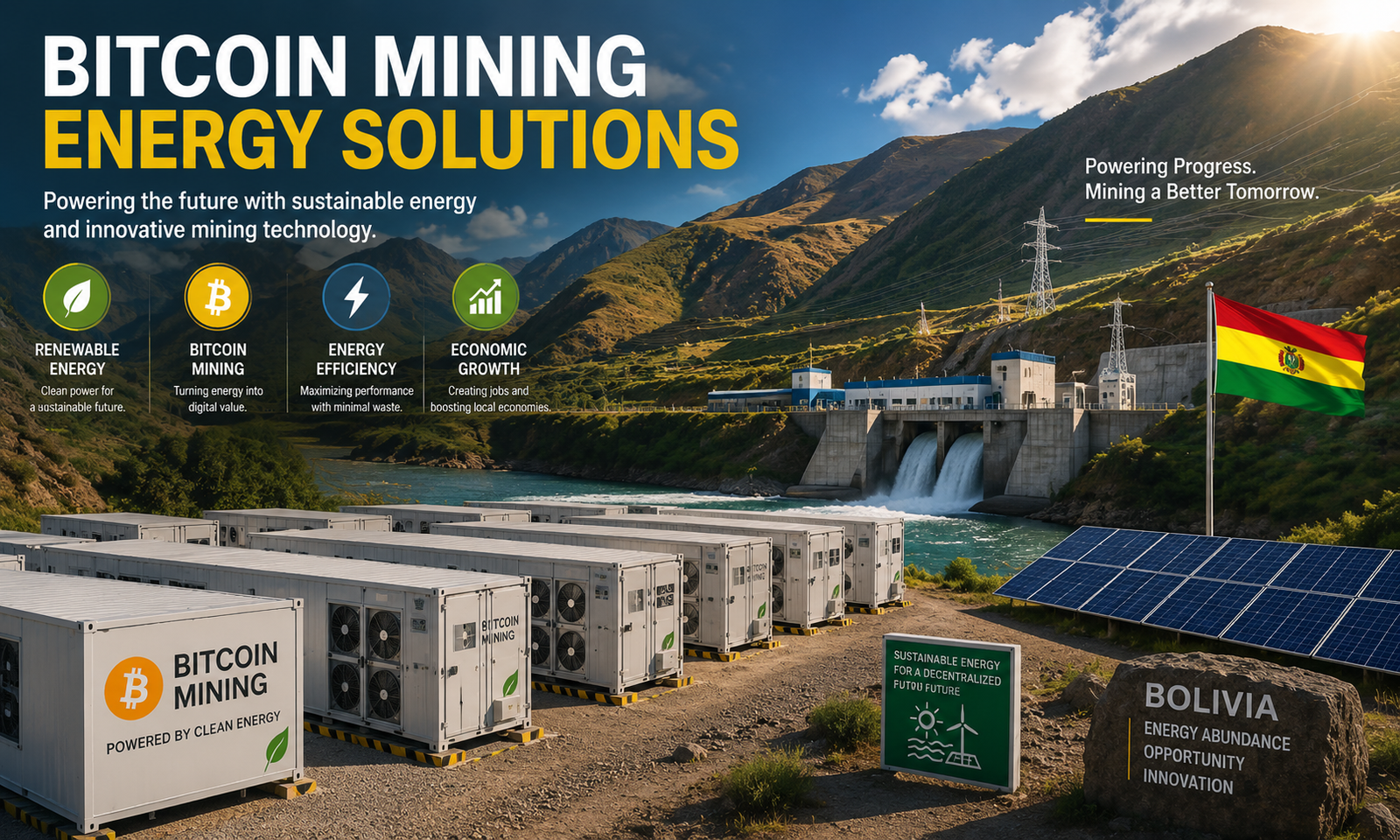
The global cryptocurrency industry continues to evolve as countries search for innovative ways to monetize unused energy resources. One of the latest developments attracting international attention is the launch of Bitcoin mining at an idle power plant in Bolivia. This initiative represents a significant shift in how developing economies may use dormant infrastructure to participate in the growing digital asset market.
As Bitcoin mining becomes increasingly competitive, operators worldwide are seeking low-cost electricity and untapped energy opportunities. Bolivia, a nation rich in natural resources and energy potential, has entered the spotlight by repurposing an underutilized power facility for cryptocurrency mining operations. The move signals a new era for both the Bolivian energy sector and the broader Latin American crypto economy. The concept behind the project is relatively straightforward yet highly strategic. Instead of allowing an inactive power plant to remain economically stagnant, the facility can now generate revenue through Bitcoin mining operations. By converting excess electricity into digital assets, Bolivia may unlock new financial opportunities while stimulating technological development and attracting foreign investment.
This development also highlights a broader global trend where energy producers and governments explore cryptocurrency mining as a method of optimizing power generation. From hydroelectric stations in Paraguay to natural gas-powered mining sites in the United States, the relationship between energy infrastructure and blockchain technology is becoming increasingly intertwined. In Bolivia’s case, the launch of a mining operation at an idle power plant could serve as a model for other countries with unused energy capacity. It demonstrates how aging infrastructure can be revitalized through modern digital industries while potentially contributing to economic diversification.
Throughout this article, we will explore the significance of Bolivia’s Bitcoin mining initiative, examine its impact on the energy sector, discuss the opportunities and risks involved, and analyze what this means for the future of cryptocurrency mining in Latin America.
Bolivia Enters the Bitcoin Mining Industry
Bolivia has traditionally maintained a cautious stance toward cryptocurrencies. For years, the country’s regulatory environment remained restrictive toward digital assets due to concerns about financial stability and monetary sovereignty. However, the launch of Bitcoin mining at an idle power plant in Bolivia suggests a gradual shift in perspective.
The decision to utilize dormant energy infrastructure for crypto mining reflects growing awareness of Bitcoin’s economic potential. Mining operations require massive amounts of electricity to secure blockchain networks and process transactions. Countries with access to affordable energy can therefore transform power generation into a profitable digital business. Bolivia’s move into the mining sector could provide a new revenue stream without requiring immediate expansion of energy production capacity. Since the power plant was previously underutilized, the mining operation essentially monetizes electricity that might otherwise go unused.
The project also positions Bolivia within the expanding Latin American crypto ecosystem. Countries across the region are increasingly exploring blockchain innovation, digital finance, and crypto-related industries. By entering the mining market, Bolivia gains an opportunity to participate in one of the world’s fastest-growing technological sectors.
Another important aspect is the international attention generated by the initiative. Global investors and mining companies constantly search for locations offering stable energy supplies and competitive operating costs. Bolivia’s entry into the sector could attract partnerships, infrastructure investments, and technology transfers that benefit the broader economy.
Why Idle Power Plants Are Attractive for Bitcoin Mining
Excess Energy Creates Economic Opportunity
One of the biggest challenges facing energy producers is managing unused electricity. Power plants are expensive to build and maintain, and idle facilities generate financial losses. Bitcoin mining provides a unique solution because miners can consume electricity directly on-site. This makes idle power plants highly attractive for mining operations. Instead of transmitting electricity through large distribution networks, operators can convert energy into Bitcoin at the source. This reduces waste and improves economic efficiency.
In Bolivia’s case, the idle power plant likely had untapped generating capacity that was not contributing significantly to national economic activity. Launching mining operations allows the facility to regain commercial value while creating employment opportunities and infrastructure utilization.
Bitcoin Mining Supports Energy Monetization
The relationship between Bitcoin mining and energy monetization has become increasingly important worldwide. Mining transforms electricity into a globally tradable digital asset. This process allows countries with surplus energy to participate in international financial markets without exporting physical resources. For Bolivia, this could create a new form of economic diversification. Instead of relying solely on traditional commodity exports, the country may leverage digital asset production as part of its economic strategy.
Mining operations can also help stabilize power demand. Energy facilities often face fluctuations in electricity consumption, especially in regions where industrial demand is inconsistent. Bitcoin mining offers flexible consumption patterns because mining machines can be adjusted according to energy availability.
The Role of Energy Costs in Bitcoin Mining
Cheap Electricity Is Essential
Electricity is the single largest operational cost in Bitcoin mining. Successful mining businesses depend heavily on affordable and reliable power sources. Countries capable of providing low-cost energy naturally become attractive destinations for mining companies. Bolivia’s energy infrastructure may provide a competitive advantage in this area. If mining operators can access inexpensive electricity from dormant facilities, they may achieve stronger profitability compared to miners operating in higher-cost regions.
The economics of mining become especially important during periods of Bitcoin price volatility. When cryptocurrency markets decline, miners with expensive electricity costs often struggle to remain profitable. Access to affordable power therefore becomes critical for long-term sustainability.
Utilizing Existing Infrastructure Reduces Costs
Another advantage of launching mining operations at an idle power plant is reduced infrastructure spending. Building new energy facilities requires significant capital investment and regulatory approvals. By using existing infrastructure, mining operators can accelerate deployment while minimizing initial costs. This approach aligns with broader global efforts to maximize efficiency in energy production. Rather than constructing entirely new facilities, companies are increasingly seeking ways to optimize underused assets. Bolivia’s initiative demonstrates how existing power infrastructure can be adapted for modern digital industries without requiring massive new development projects.
Bitcoin Mining and Bolivia’s Economy
Potential Economic Benefits
The launch of Bitcoin mining in Bolivia could generate several economic benefits. First, mining operations create direct and indirect employment opportunities. Technicians, engineers, security staff, and infrastructure specialists may all play roles in supporting mining facilities. Second, the project may stimulate technological innovation within the country. Cryptocurrency mining requires advanced computing systems, cooling technologies, and energy management solutions. Exposure to these technologies can contribute to workforce development and digital modernization.
Third, successful mining operations may attract foreign investment. International crypto firms often seek strategic partnerships in regions with favorable energy conditions. Bolivia could therefore position itself as an emerging hub for blockchain-related activities in Latin America.
Diversifying National Revenue Streams
Economic diversification remains an important priority for many resource-dependent countries. Bolivia has historically relied on sectors such as natural gas and mineral exports. Entering the cryptocurrency mining industry introduces a new digital revenue stream that operates independently of traditional commodity markets. Bitcoin itself is often described as “digital gold,” and mining enables countries to participate directly in its production. If managed effectively, mining operations could supplement national revenues while reducing dependence on volatile export markets. The project may also encourage broader discussions around blockchain adoption and digital finance within Bolivia’s economy.
Environmental Concerns and Sustainability
The Debate Around Bitcoin Mining Energy Use
Bitcoin mining has faced criticism over its energy consumption. Critics argue that mining operations consume excessive electricity and contribute to environmental problems. Supporters, however, contend that mining can incentivize renewable energy development and improve utilization of stranded power resources. The environmental impact of Bolivia’s mining initiative depends largely on the power source used by the plant. If the facility relies on cleaner energy generation methods, the mining operation may have a lower carbon footprint compared to fossil fuel-powered mining sites elsewhere.
Globally, many mining companies are increasingly focusing on sustainability. Renewable energy-powered mining projects are expanding rapidly as the industry seeks to improve public perception and operational efficiency.
Idle Infrastructure May Reduce Waste
Using an existing idle power plant may actually improve overall energy efficiency. Instead of allowing infrastructure to remain dormant, the facility now contributes economically productive output. In some cases, Bitcoin mining can help absorb excess electricity that would otherwise be wasted.
This concept is particularly relevant in regions with inconsistent industrial demand or underdeveloped transmission systems. Mining operations can act as flexible consumers that stabilize energy usage patterns. For Bolivia, sustainability considerations will likely remain central to the long-term success of the project.
Latin America’s Growing Interest in Cryptocurrency Mining
Regional Expansion of Crypto Mining
Latin America has become an increasingly important region for cryptocurrency adoption and mining activities. Countries such as Paraguay, Argentina, and El Salvador have attracted attention due to favorable energy conditions and growing interest in blockchain technology.
Bolivia’s entry into the mining industry reflects this broader regional trend. Energy-rich nations are beginning to recognize the strategic value of digital asset production. Several factors contribute to Latin America’s attractiveness for mining operations. These include abundant hydroelectric resources, lower operational costs, and expanding technological infrastructure.
Competition Among Emerging Mining Hubs
As more countries explore crypto mining opportunities, competition among emerging mining hubs is intensifying. Governments seek to attract investment while balancing energy security and regulatory oversight.
Bolivia’s idle power plant initiative may strengthen its position within the regional crypto economy. However, long-term success will depend on regulatory clarity, energy stability, and investment-friendly policies. If Bolivia develops a supportive framework for digital asset industries, it could potentially attract larger-scale mining operations in the future.
Challenges Facing Bitcoin Mining in Bolivia
Regulatory Uncertainty
Despite the optimism surrounding the project, challenges remain. One of the biggest concerns is regulatory uncertainty. Cryptocurrency regulations in many countries continue to evolve rapidly, and policy changes can significantly impact mining operations.
Bolivia’s historical caution toward digital assets may create uncertainty for investors. Mining companies generally prefer stable legal environments before committing substantial capital to infrastructure projects. Clear regulations regarding taxation, energy usage, digital asset ownership, and international transactions will be essential for industry growth.
Market Volatility
Bitcoin mining profitability is closely tied to cryptocurrency prices. During market downturns, mining revenues can decline sharply. Operators must therefore carefully manage operational costs and financial risks. Bolivia’s mining initiative may perform well during bullish market conditions, but sustained profitability will depend on efficient operations and adaptable business strategies.
Infrastructure and Technology Requirements
Mining operations require reliable internet connectivity, cooling systems, and advanced hardware maintenance capabilities. Bolivia will need to ensure that supporting infrastructure can meet the technical demands of large-scale mining. Continuous upgrades may also be necessary as mining technology evolves. Competition within the industry is intense, and outdated hardware can quickly become unprofitable.
The Global Shift Toward Energy-Based Bitcoin Mining
Energy Producers Becoming Mining Operators
A notable trend in the cryptocurrency industry is the increasing involvement of energy producers in Bitcoin mining. Rather than selling electricity exclusively to consumers or industrial clients, some companies now mine Bitcoin directly using surplus power.
This strategy allows energy producers to diversify revenues and potentially increase profitability. Idle or stranded energy resources can become valuable assets in the digital economy. Bolivia’s project fits within this global movement. By connecting an inactive power plant to mining infrastructure, the country is participating in a rapidly growing model of energy monetization.
Mining as a Strategic Economic Tool
Governments and businesses are beginning to view Bitcoin mining not merely as a technological activity but as a strategic economic tool. Mining can support grid stability, encourage infrastructure investment, and generate foreign currency earnings.
For countries with underused energy resources, mining offers a pathway toward greater economic productivity without requiring traditional industrial expansion. This perspective may explain why interest in state-supported or energy-backed mining projects continues to rise worldwide.
The Future of Bitcoin Mining in Bolivia
Potential Expansion Opportunities
If the initial mining project proves successful, Bolivia may consider expanding its involvement in the cryptocurrency sector. Additional idle power plants or surplus energy facilities could potentially be integrated into mining operations.
The country may also explore partnerships with international blockchain firms, technology providers, and infrastructure investors. Expansion could further strengthen Bolivia’s digital economy while increasing global visibility in the cryptocurrency industry.
Building a Digital Economy
Beyond mining itself, the project could encourage broader digital transformation. Blockchain technology has applications across finance, logistics, energy management, and government services. As awareness of cryptocurrency grows, Bolivia may see increased interest in fintech innovation, digital payments, and blockchain entrepreneurship. The launch of mining operations at an idle power plant could therefore represent more than an isolated industrial project—it may mark the beginning of a broader technological evolution.
The launch of Bitcoin mining at an idle power plant in Bolivia represents a major development in the intersection of energy infrastructure and digital finance. By transforming dormant power generation capacity into a productive crypto mining operation, Bolivia is entering a rapidly evolving global industry with significant economic potential.
This initiative highlights how countries can monetize unused energy resources while participating in the expanding cryptocurrency ecosystem. The project may generate employment, attract investment, and encourage technological innovation within Bolivia’s economy. At the same time, challenges related to regulation, market volatility, and sustainability remain important considerations. Long-term success will depend on careful management, supportive policies, and efficient operations.
As global demand for Bitcoin mining continues to grow, Bolivia’s approach may inspire other nations to reconsider how idle infrastructure can support digital industries. The project demonstrates that energy and blockchain technology are becoming increasingly interconnected in the modern economy.
Whether Bolivia becomes a major cryptocurrency mining hub remains to be seen, but the launch of mining operations at an idle power plant has already positioned the country within one of the most transformative technological movements of the digital age.
